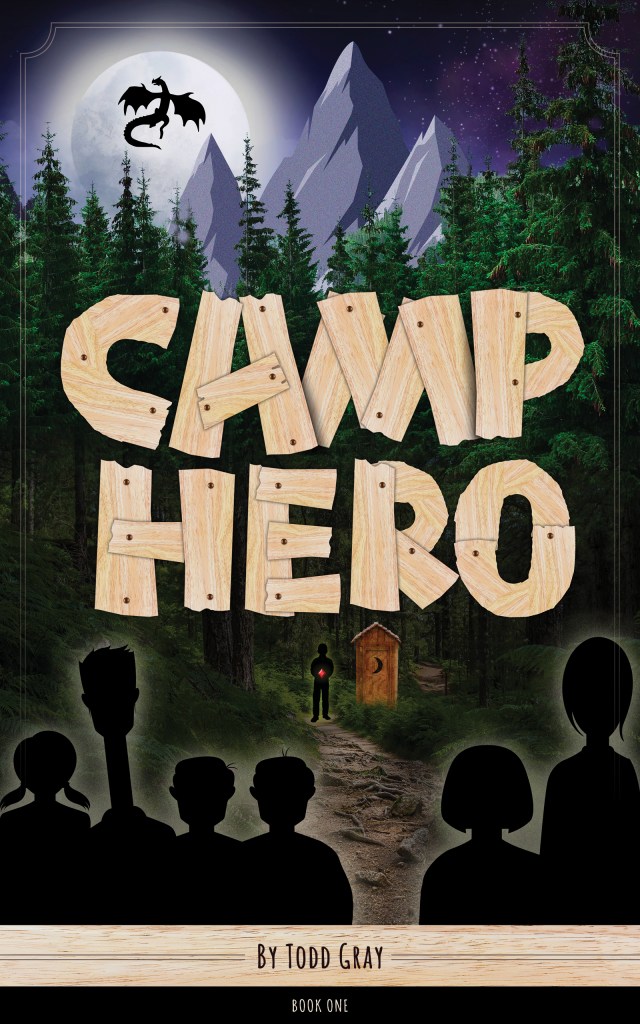
Plot: What the story is about. Camp Hero follows three siblings- Kate, Nate, and Tate, who discover a mysterious envelope sitting on the kitchen table, revealing that they’ve been sent to a previously off-limits sleepaway camp in the Colorado mountains. What begins as an ordinary trip quickly turns into an incredible adventure when the siblings learn they’ve been selected to attend a top-secret camp designed to train children with hidden superhero abilities.
As they try to master their new powers, Kate, Nate, Tate, and their newfound friends find themselves caught up in a decades-old plot to destroy Camp Crusader. The stakes are high as they work together to uncover the truth and save the camp from a looming threat.
Setting: Where the story takes place. The story begins in the Larson family home. The remainder of the story takes place at Camp Crusader in the Colorado Rocky Mountains.
Conflict: What are the problems in the story? The children face numerous challenges throughout the story. Not only do they have to learn how to harness their newly discovered powers, but they also must deal with bullying from others at the camp.
The central conflict centers around the children and their friends working together to defeat an individual determined to destroy them and Camp Crusader. As they confront this threat, they must rely on their newfound abilities, bravery, and teamwork to protect themselves and the camp.
Characters: Camp Hero features three main protagonists: Kate, Nate, and Tate. As the story unfolds, they are joined by other campers on their mission to save Camp Crusader. Along the way, they encounter various characters, including a camp bully named Scott. There are also other important characters whose identities can’t be named on this blog to avoid spoiling the plot.
Themes: Some of the key themes in Camp Hero include:
- Learning to stand up to bullies – The characters must find the courage to confront those who try to bring them down.
- Understanding others’ behavior – The story encourages readers to stop and consider why people act the way they do, promoting empathy and understanding.
- Accepting mistakes – It’s okay for the characters (and people in general) to make mistakes, as they are part of the learning process and growth.
Point of View:
Camp Hero is told in the first person from Tate Larson’s perspective. As the narrator, Tate’s telepathic abilities allow him to read the thoughts of others, even those not directly in his line of sight. This unique ability allows the reader to “look into” the minds of other characters.
Tone:
The tone of Camp Hero is mostly serious, focusing on action, adventure, and the challenges the characters face. However, there are also moments of humor that add balance and lighten the mood, making the story both engaging and enjoyable.
Style:
The writing style of Camp Hero is clear and straightforward, making it easy for readers to follow the plot and character development. While the language remains simple, the author uses figurative language at key moments to add vividness and keep the story engaging.
You can also follow Todd on Amazon @ Amazon.com/author/toddgray1
Or email him @ Toddgrayauthor@gmail.com
 Author Todd Gray